
February 4, 2021

Join Us This Winter in Fighting For Freedom!

Kate Reilly

January is National Slavery and Human Trafficking Prevention Month. The goal this month is to bring modern-day slavery that occurs quietly in our cities and towns to light. But what is modern-day slavery? Modern-day slavery is any form of forced human exploitation for labor or service. There are two main types: Human Trafficking and Labor Trafficking. 

What is sex trafficking? Human trafficking is commercial sex acts induced by force, fraud, or coercion, or in which the person performing the act is under the age of 18. (For victims over 18,force, fraud, or coercion must be proven.) 

What is Labor Trafficking? Labor trafficking is the use of force, fraud, or coercion to recruit, harbor, transport, or employ a person for labor services in domestic servitude, debt bondage, or slavery. Within this sort of trafficking, age is not important and adults and children are usually treated similarly.

Did you know that there are 25 different specified kinds of human trafficking? They are: Escort Services; Illicit Massage; Health & Beauty Services; Outdoor Solicitation; Residential Sex Trafficking; Domestic Work; Bars, Strip Clubs, & Cantinas; Pornography; Traveling Sales Crews; Restaurants & Food Service; Peddling & Begging; Agriculture & Animal Husbandry; Personal Sexual Servitude; Construction; Hotels & Hospitality; Landscaping; Illicit Activities; Arts & Entertainment; Commercial Cleaning Services; Factories & Manufacturing; Remote Interactive Sexual Acts; Carnivals; Forestry & Logging; Health Care; Recreational Facilities.

That’s quite a lot of different types, and the varying amounts might surprise you. In short, human trafficking exists across many different categories in our day-to-day lives, and it more than likely exists within your immediate community. 

During 2021, consider becoming involved in our fight against local and national human trafficking! You can make an impact by doing one or all of the following to help us raise awareness and show your support: 


    1. Donate to Reset180. Your financial gifts help us Prevent and Disrupt local slavery, and Restore survivors. Learn more about our mission here
    2. Become a Reset180 Abolitionist! When you join, you will receive a toolkit, be a part of special events, and join a private Facebook group that serves to help educate and equip our Abolitionists in this fight for freedom. 
    3. Post or repost on your social media. Part of raising awareness is spreading the message. Follow us on social media or sign up to receive our newsletter so you can become a part of the conversation. We share updates, stories, and ways to get involved weekly! 
    4. Write a letter to your congressman asking what steps they are taking to prevent and disrupt human trafficking. 
    5. Organize a night of prayer through your church or local group to raise awareness and pray for victims and justice for those who engage in human trafficking. 
    6. Create a virtual event or start a fundraiser with friends and families to educate them on the Red Flags of Human Trafficking. Don’t know the Red Flags to look out for? We list some big ones below. 
    7. Save the hotline on your phone and ask at least two friends to do the same. Pass it on so that everyone has the number they need if they encounter any Red Flags. You can find local hotlines listed here. Otherwise, use the following numbers to report a tip: National Human Trafficking Hotline at 1-888-373-7888, or text to BeFree (233733). For emergencies call 911.

Victims of modern-day slavery are often easy to miss in everyday life, but there are some things you can look out for that might alert you to a sex or labor trafficking situation. We call these Red Flags, and you can learn some of them below: 

  • The person is isolated (physically and/or emotionally).
  • Withdrawn from friends & family.
  • They have few friends at school or in life. 
  • They have brands, tattoos or unexplained bruises/injuries.
  • They post sexually explicit photos on social media.
  • Use lingo like “daddy” or “papi” to refer to male friends.
  • They are acting fearful, anxious, nervous/paranoid, or depressed.
  • They behave in a way that is not common for their age:
    • lashing out, isolating, angry. 
  • They abuse drugs, alcohol, or other substances.
  • They are gone for hours/days at a time, often skipping school/work. 
  • The person is not allowed to go anywhere other than school or home.
  • Their place of living/working has unusual security measures.
  • Places of living/work where women go in but rarely leave. 
  • Females are escorted by males.
  • Multiple women arrive and leave their destination in the same vehicle. 


Raising Awareness WORKS! Consider the following story: 

There was a Human Trafficking Awareness event hosted at a local school. During this event, a speaker shared various Red Flags to look for that might indicate someone was a victim of human trafficking. As a student sat there listening to these Red Flags, she found that her sister matched many of them. It was at that moment that she realized her sister was a victim of human trafficking. 

The student became upset and went into the hall to process what she had just realized. A counselor intercepted her and when asked what was wrong, she found her voice. She shared that she believed, based on the presentation and Red Flags, that her sister was a victim of human trafficking. The right people were informed because of her awareness, and her sister was able to be helped. If her sister hadn’t been made aware of the signs, who knows what might have happened. Knowing the signs is the first step in becoming a Defender of Freedom against local human trafficking hiding in plain sight. 

Here are five questions you can ask yourself to help identify a victim of human trafficking: 

  1. Are they in the company of someone older, or do they only hang out with people older than them?
  2. Do they show signs of physical or mental abuse? Do they have bruises, an unhealthy look, or seem disoriented, confused, and withdrawn?
  3. Do they seem to be lacking personal possessions, wearing the same clothes, or don’t appear to have a home they regularly go to? 
  4. Do they have randomly nice items on their person; expensive watches/jewelry, a nice cell phone, but otherwise appear to lack personal items?
  5. Are there unreasonable security systems where they live like security cameras, locks on all doors, or a locked fence around the property? 


Making an impact in your community starts with YOU! Make it your 2021 mission to raise your voice and raise awareness. Hosting an event or have a story to share? We would love to hear from you. You can email us at info@reset180.com, message us on social media, or tag us in your efforts with the hashtag #Reset180. Let’s make it our goal to make a big impact in our fight against local human trafficking this new year! 

More blogs

June 9, 2020

Human Trafficking in Under Ten Minutes

Kate Reilly

When people hear the words, “human trafficking,” they perhaps think of faraway places beyond the borders of their own state, perhaps even beyond the borders of their own country. The term is used to reference a horrible reality that is distant from them. However, they couldn’t be more wrong. Human trafficking is a criminal industry that impacts and affects over 40 million victims globally, and 83% of human trafficking victims are US citizens, (Educate). The TIP report is put out by the State Dept annually. In the 2018 Trafficking in Persons Report (TIP), it states that the top three nations of origin for victims of Human Trafficking are the United States, Mexico, and the Philippines.

But what is human trafficking? The dictionary defines it as, “the action or practice of illegally transporting people from one country or area to another, typically for the purposes of forced labor or sexual exploitation,” (Dictionary.com, 2020). Most think of human trafficking as it is portrayed in the media and movies, such as “Taken.” However, what this definition disallows is an understanding of actions against victims that are both big and small, and still considered human trafficking.

One of the greatest ways to help fight back against human trafficking in the Virginia area and nationwide is to educate yourself and others. Below are five resources to help you join the fight against human trafficking.

  1. Visit our Facebook page to watch our quick one minute video to better understand why human trafficking happens and peer into the emotional vulnerability of the victims: Click here.

  2. Home Land Security works tirelessly to hunt down predators and trafficking rings through investigations and tips from people just like you. Visit their website to educate yourself on key indicators to look for when trying to identify a victim and possibly save a life. They also have this list on a printable or orderable card so that you can carry it with you at all times: Click here.

  3. The concept of human trafficking is, unfortunately, surrounded by myths and misconceptions that prevent the public from realizing that this crime goes on around and near them. One of the best steps to contributing and fighting against this crime is to recognize and help spread the word on common myths. Myths such as human trafficking only happens outside the U.S. or that human trafficking only victimizes the poor and foreign nationalities. Learn more here about common misconceptions: Click here.

  4. Learn the numbers around you and inform others, too; human trafficking happens closer to home then you think. You can view your state’s statistics: Click here.

  5. The best tool you can equip yourself with is to know the steps to take in reporting a possible victim. Remember as many details about the situation as possible, noting the victim, details about the person you believe is the trafficker, license plate numbers, car type, and the location where the event was witnessed. Call the National Human Trafficking Hotline toll-free at 1-888-373-7888 and share your collected details. You can also text the National Human Trafficking Hotline at 233733, or visit the National Human Trafficking Hotline online chat via, www.humantraffickinghotline.org/chat, (Mellissa Withers, 2019).

If you wish to continue to educate yourself, here are six documentaries you can watch, (Elena Baxter, 2019).

  1. I Am Jane Doe

  2. In Plain Sight

  3. Nefarious: Merchant of Souls

  4. Sex + Money: A National Search for Human Worth

  5. The Abolitionists

  6. Blind Eyes Opened

Follow us on social media to stay up to date on the most current events and show your support:

Interested in helping to educate your community? Visit our website to learn more about requesting a speaker or speaking events taking place near you. Learn more here.

Reference List:

Educate. Retrieved from http://fiercefreedom.org/educate/

Dictionary.com (2020). Human Trafficking. Retrieved from https://www.dictionary.com/browse/human-trafficking?s=t

Mellissa Wither. (2019). Be the Change: How you can end human trafficking. Retrieved from https://www.publicservicedegrees.org/be-the-change/stop-human-trafficking/

Elena Baxter. (2019 ). 5 Documentaries to Watch to Educate Yourself About Human Trafficking. Retrieved from https://www.freedomplaceproject.com/single-post/2018/09/25/5-Documentaries-to-Watch-to-Educate-Yourself-About-Human-Trafficking

More blogs

August 10, 2020

Keep your Children Safe from Online Predators During COVID-19

Kate Reilly

The COVID-19 crisis has impacted the way children learn and parents parent. Schools and daycare centers have kept their doors closed in hopes of stopping the spread of the virus, and places of work shifted gears to fully remote to keep their industries up and running. As the tough times extend through the summer months and children have even more free time on their hands, it is more important than ever to continue to closely monitor children’s time online.


These changes, while positive in response to the virus, make for a difficult situation in the home. The inability to schedule playdates, utilize daycare centers, or hire summer nanny’s leaves much of the daily stresses of keeping children entertained on the working-from-home parents. This shift in children’s social life has pulled them from in-person activities and friendships to online ones, with a significant increase of time spent on handheld devices and the internet. While this shift can have positive benefits-still interacting with friends while socially distancing and doing e-learning through their schools- more internet time comes with more risk.

The Risk of Your Child Encountering an Online Predator is Increasing 

Children are spending more time online due to COVID-19 and parents are finding themselves overburdened by the mounting expectation of keeping up with their jobs while also keeping up with the continuous daily needs and education of their children. In addition, the threat of online predators has increased due to the shelter in place directional. “In just the first four weeks of lockdown, the number of suspected child abuse cases in the U.S. more than doubled to over two million,” according to the National Center for Missing and Exploited Children, (Margolis, 2020). Predators are taking advantage of the increased time online and lack of direct supervision. This combined with the emotional anxiety and inclining sadness in younger children due to the virus is creating, according to Andy Burros, head of child safety online policy for the National Society for the Prevention of Cruelty to Children, “the perfect storm,” (Margolis, 2020).

Steps to Take to Keep Children Safe

Conversations about online predators and the dangerous situations that can exist online should be had between parents and their children. Even if parents have already discussed these issues, now is a necessary time to review the rules and risks of online gaming, chat rooms, and social media. Remind children/teens that predators can access online gaming rooms and social media with ease. Agree that children report anything strange or uncomfortable to the parent, stressing that there is nothing to fear or any trouble that can result in their sharing. Ask them to demonstrate that they know how to report and block users and direct messages.

Below are some bullet points on what to cover with a child/teen:

  • How sexual predators present themselves; often using fake photos and names, lying about their age and location

  • Red lights that should result in them reporting the situation to a parent and then reporting/blocking the person:

    • Direct messages that ask for their name, age, address, what school they attend, or photos of them

    • Direct messaging them inappropriate photos

    • Asking the child to not share their ‘friendship’ with their parents/keeping them a secret

  • Remind the child to never share their address, the name of their school, or locational information on social media or gaming sites

  • Never sharing photos or allowing others to share photos that are of an inappropriate nature

  • Reporting any activity that makes the child feel uncomfortable, unsure, or upset

Come up with a plan that outlines daily screen time so that the child is never alone with a private screen, and don’t allow children/teens to go to bed with their devices. “Monitor your child’s devices by looking at their search history, reading their text messages, and monitoring what they’re posting,” (Margolis, 2020).


Luckily, parents don’t have to fight against online predators alone. Apps like Bark allow parents to monitor their child’s online activities, while apps like Net Nanny allow parents to block content, apps, and sites entirely on devices (Margolis, 2020).

Acronyms to Know and Be Aware of on Social Media and Chats/Texts

The Child Rescue Coalition pulled research and gathered a list of frequently used acronyms that are vital for parents to learn and know, (Culture Reframed, 2020). Researchers found that children are developing their own type of language to keep parents out of the loop – and that predators are learning and using them, too.

MIRL – Meet in real life

MOS – Mom over shoulder

NIFOC – Nude in front of computer

NSFW – Not safe for work

P911 – Parent alert

PAW – Parents are watching

PAL – Parents are listening

PIR – Parent in room

POS – Parent over shoulder

PRON – Porn

RUMORF – Are you male or female?

SWAK – Sealed with a kiss

TDTM – Talk dirty to me

WTTP – Want to trade pictures?

8 – Oral sex

99 – Parent gone

142 or 459 – I love you

182 – I hate you

1174 – Nude club

ASL – Age/sex/location

CD9 – Code 9 means parents are around

FYEO – For your eyes only

GNOC – Get naked on camera

GYPO – Get your pants off

HAK – Hugs and kisses

KFY – Kiss for you

KPC – Keeping parents clueless

Sources

Culture Reframed (2020, February 18). Learn the Acronyms & Abbreviations That Predators Use. Cultureframed.

https://www.culturereframed.org/online-predators/

Margolis, C. (2020, July 20). Pedophiles Are Sharing Grooming Manuals Online, And It’s Perfectly Legal. EvieMagazine.

https://www.eviemagazine.com/post/pedophiles-are-sharing-grooming-manuals-online-and-its-perfectly-legal/

More blogs

September 15, 2020

5 Simple Ways You Can Help Fight Human Trafficking

Kate Reilly

NORTHERN VIRGINIA HUMAN TRAFFICKING INITIATIVE (NOVA-HTI) HAS BEEN AN ACTIVE NON-PROFIT ORGANIZATION IN THE AREA FOR 10 YEARS. WE WOULD LIKE TO TAKE A MOMENT TO SHARE HOW YOU CAN HELP IN OUR CONTINUING FIGHT AGAINST HUMAN TRAFFICKING.

5 simple ways you can help and bring awareness to our cause:

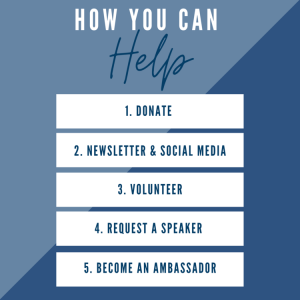
  1. Donate

  2. Sign up for our monthly newsletter and follow us on social media; Facebook, Twitter, Instagram

  3. Volunteer

  4. Organize a local event and request a speaker

  5. Become an abolitionist

1) Donate: Consider a financial donation or contribution to our Wish List. Our Wish List captures current needs, gift cards, and items that will help support victims or victim support centers. This Wish List also outlines professional services we often seek to help support our clients. Learn more here. 

2) Sign up for our monthly newsletter and follow us on social media: Our monthly newsletter is an easy way to stay up to date on our latest fundraisers and local opportunities. We share steps on how to continue being an involved community member, local stories, and more! You can also follow us on social media. It is an easy way to show your support, share relevant information with our growing community, and access a wealth of educational information.

3) Volunteer: We always have opportunities for you to become involved locally. Check out our website for ways you can begin volunteering right now to make a difference. We are also always looking for professional volunteers to donate their knowledge, skills, and time to further our cause.

4) Organize a local event: Bringing community members together is still one of the most impactful ways to raise awareness. Due to the current circumstances, consider hosting a Zoom event and requesting one of our speakers to share with your friends and family. We also invite you to be a part of our 2020 Gala coming up in November that will take place 100% virtually.

5) Become an ambassador: As an ambassador you carry the cause and will be equipped with our Tool Kit to support you in becoming a vital influence within your community. Learn more about our ambassador program here.

Thank you for being a part of our efforts. We could not continue to do the work we do without the support and love of our community.

More blogs